Home / Eye Symptoms / Trouble Seeing at Night
Night vision & glare problems in Bellflower
Glare from headlights, halos around lights and trouble seeing in the dark are common complaints, and many causes can be improved.
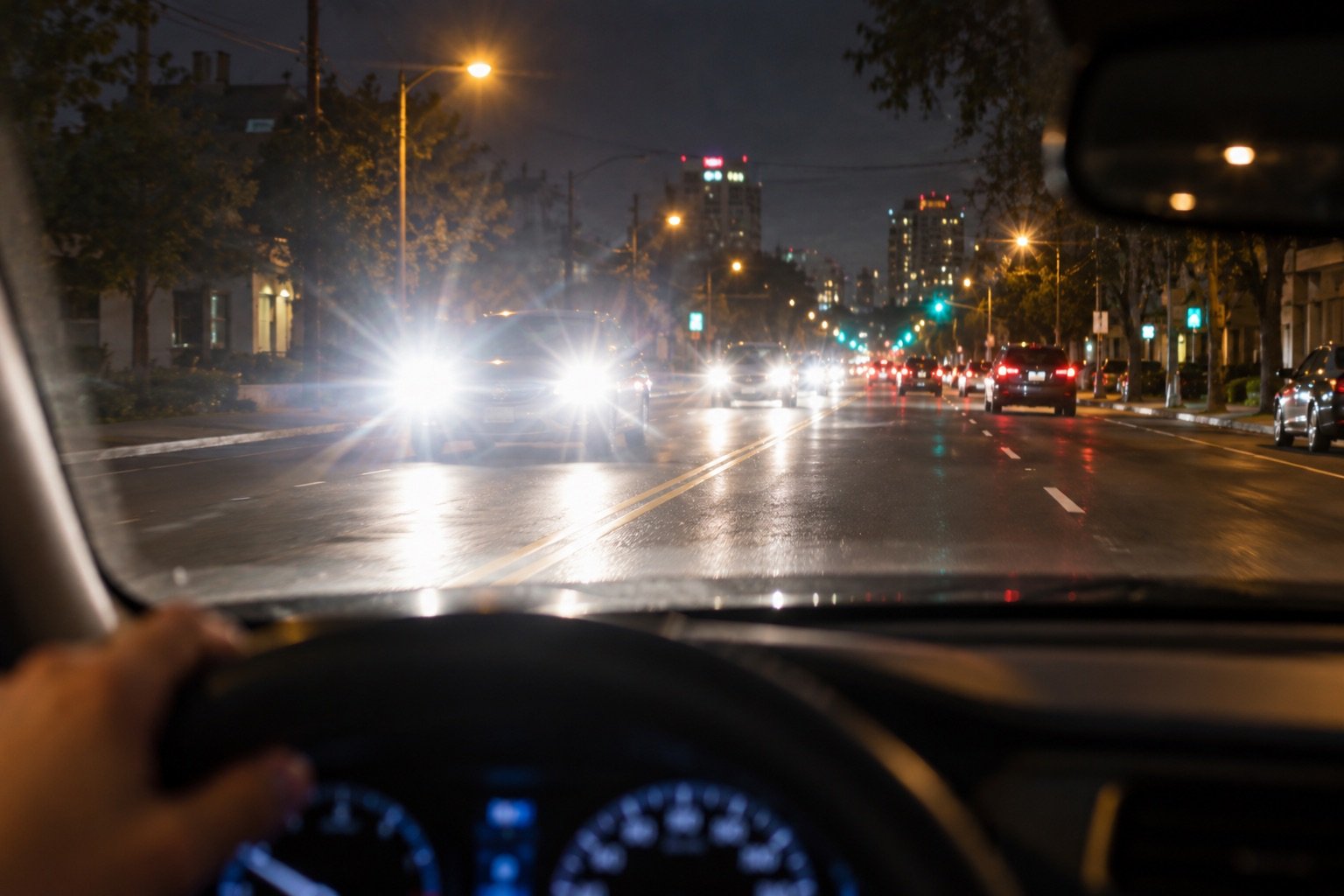
Low light makes small problems bigger
In the dark, your pupils widen and let in more light from the edges of the eye’s optics. That makes even small prescription errors, dry spots or early cataract changes far more noticeable, which shows up as glare, starbursts and blur.
A thorough exam can tell whether you need an updated prescription, anti-reflective lenses, dry eye care, or monitoring for cataracts.
Seen by Dr. Mai in Bellflower
Most symptom visits are billed to medical insurance, including Medicare and Medi-Cal plans. Call early in the day for the best chance at a same-day visit.
What can cause trouble seeing at night?
Most causes are very treatable. A proper eye exam tells you which one you’re dealing with.
Outdated prescription
Mild nearsightedness often shows up first at night.
Cataracts
Clouding of the lens causes glare and halos around lights.
Dry eye
An uneven tear film scatters light.
Lens reflections
Scratched lenses or lenses without anti-glare coating.
Diabetes
Changes to the retina can affect night vision.
Retinal conditions
Less commonly, inherited retinal conditions affect night vision.
When should you see an eye doctor?
Book an eye exam if…
- You see halos or starbursts around lights
- Headlight glare makes driving uncomfortable
- Road signs are hard to read at night
- You’ve started avoiding driving after dark
- You’re over 60 and haven’t had an exam this year
How we find the cause and treat it
Your visit is with Dr. Loi Thanh Mai. Our team speaks English, Spanish and Vietnamese.
Your night-time symptoms
When it happens and what you see.
Prescription check
Including small changes that matter in the dark.
Lens & cataract evaluation
We examine the clarity of your eye’s natural lens.
Solutions
New lenses with anti-glare coating, dry eye care, or cataract co-management.
Simple steps that may help
These tips can ease mild symptoms, but they don’t replace an eye exam, especially if symptoms are new, getting worse, or affect your vision.
- Keep your windshield and glasses clean, inside and out
- Ask about anti-reflective coating on your lenses
- Look toward the right edge of the road when facing oncoming headlights
- Dim your dashboard lights
- Avoid tinted “night driving” glasses, which reduce the light you need
Trouble Seeing at Night: common questions
Have a question about your symptoms? Call (562) 867-4716.
Why is my night vision getting worse?
Common causes include a changing prescription, early cataracts and dry eye. An eye exam can find the cause.
Do anti-glare glasses help night driving?
Anti-reflective coating reduces reflections on your lenses and can make night driving more comfortable.
Are yellow night driving glasses safe?
Tinted lenses reduce the total light reaching your eyes and aren’t recommended for night driving.
Can cataract surgery improve night vision?
When cataracts are the cause, surgery often greatly reduces glare and halos. We co-manage cataract care close to home.