Home / Services / Eyewear & Frames / Lenses & Coatings
Eyeglass lenses & coatings in Bellflower
Frames are what people see. Lenses are what you see through. Here’s a plain-English guide to lens types, materials and coatings, and how we help you choose.
Why your lens choice matters
Two people with the same prescription can have very different experiences depending on the lens design, material and coatings they choose. The right combination makes your glasses clearer, thinner, lighter and more comfortable to wear all day.
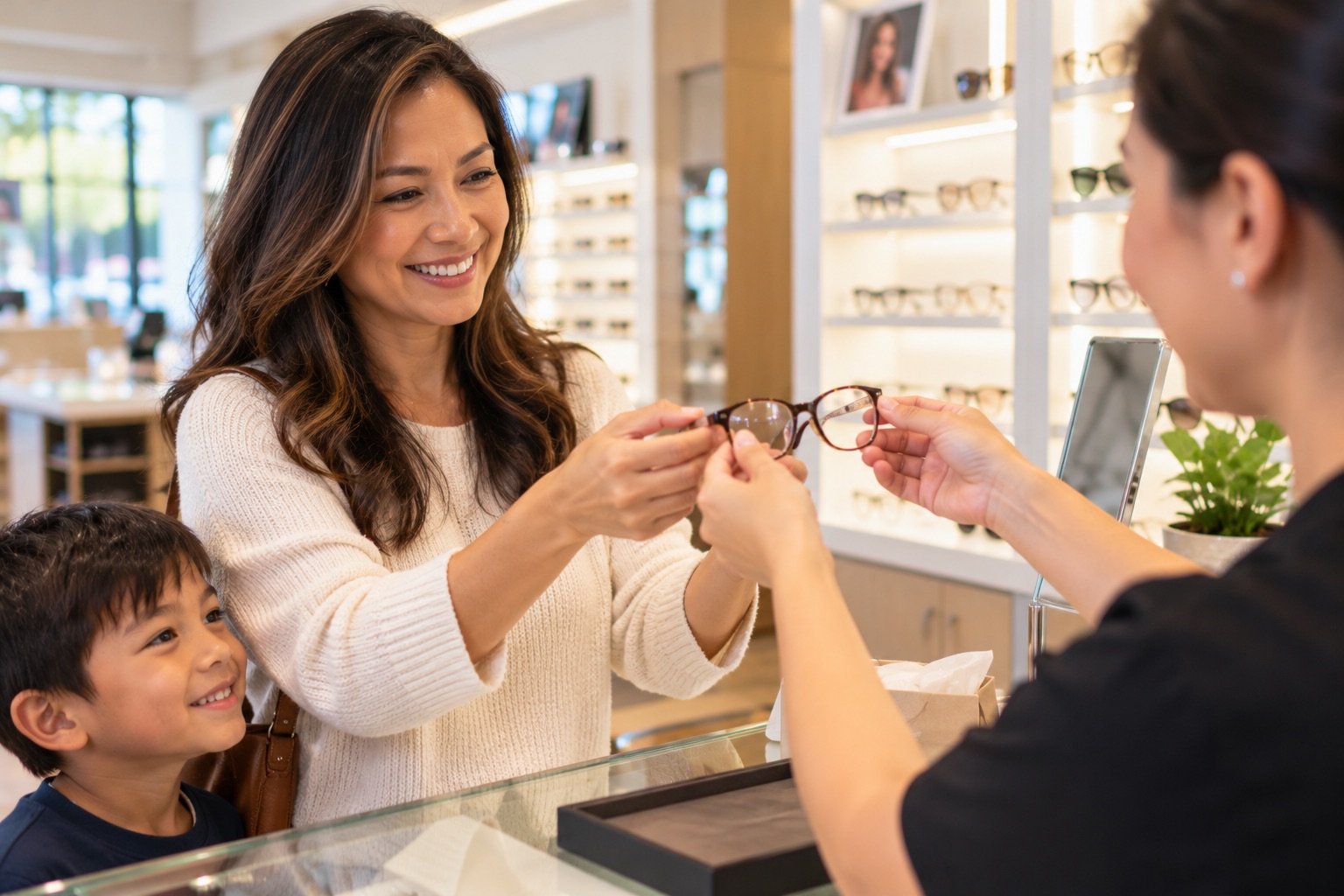
At Radiant, Dr. Mai and our optician Freddy look at your prescription, your frame and how you use your eyes, from screens and reading to driving and sports. We explain your options and the cost before you order, with no pressure to upgrade.
Which lens design is right for you?
Your lens design depends on whether you need help seeing far away, up close, or both.
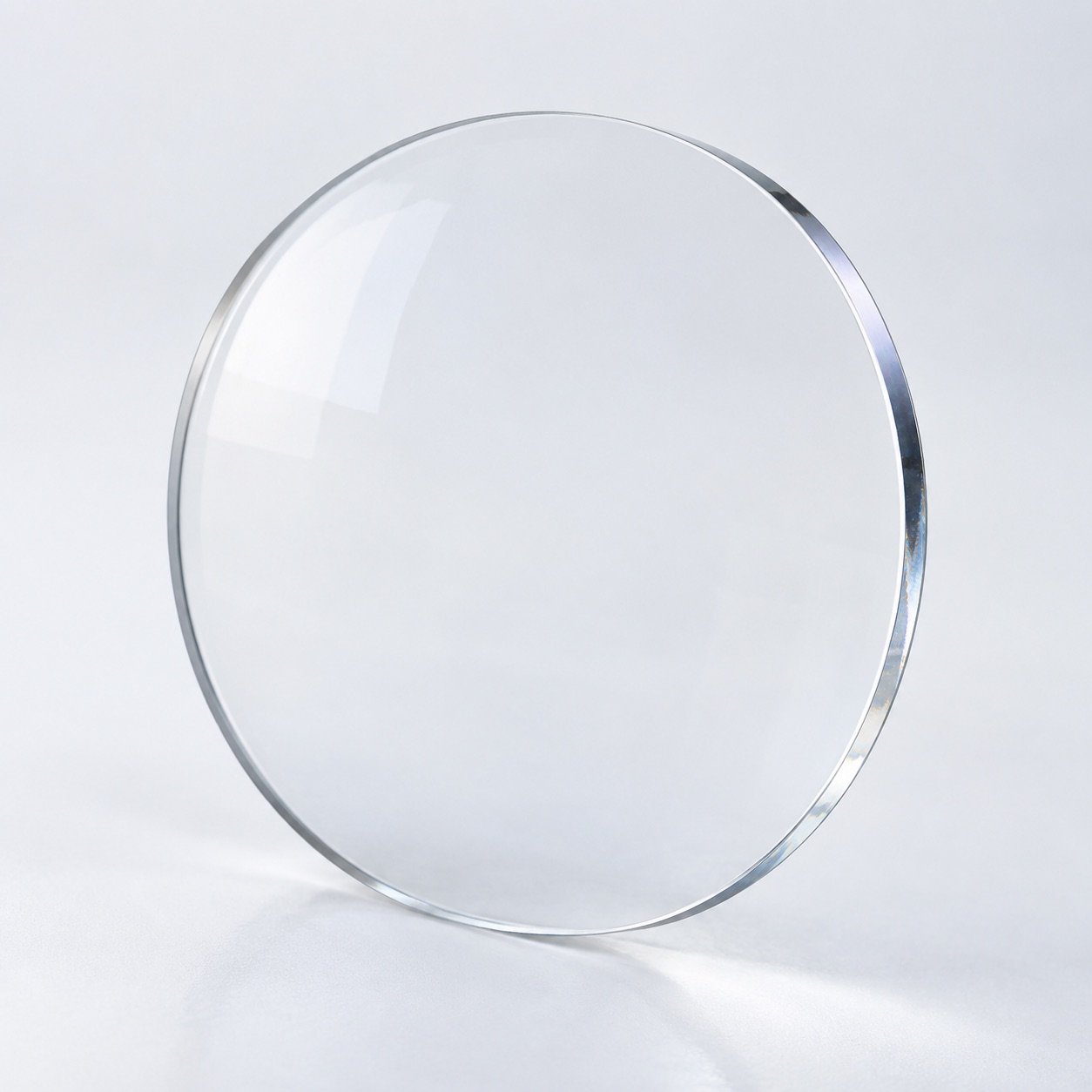
Single vision
One prescription across the whole lens, for distance or for reading. The most common lens, and many can be ready the same day.

Bifocals
Two zones, distance on top and reading below, separated by a visible line. A simple, budget-friendly option some people prefer.

Trifocals
Three zones for distance, arm’s length and reading, separated by visible lines. Adds a clear middle zone for computers and dashboards.
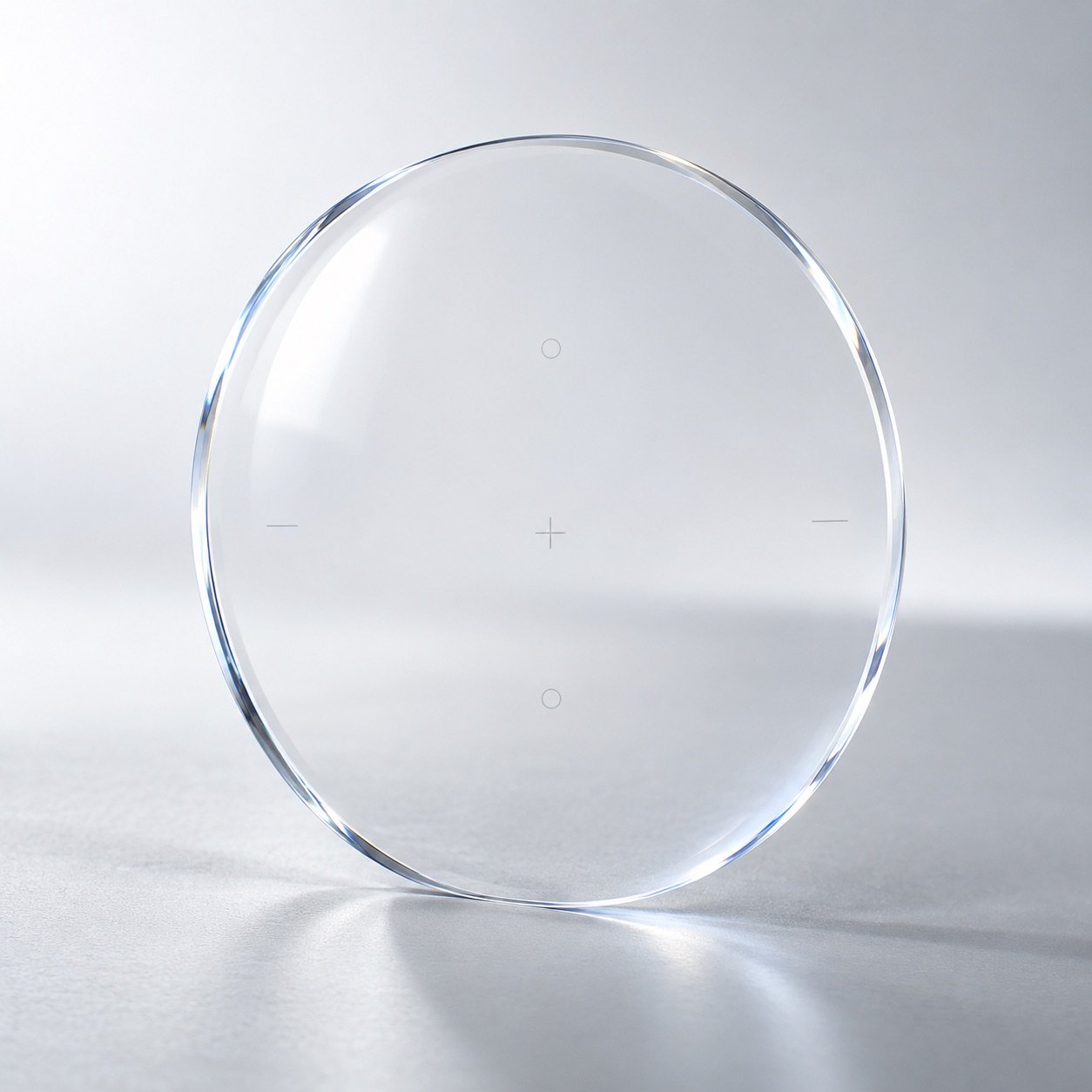
Progressive lenses
No-line multifocals that shift smoothly from distance to computer to reading. One pair for everything once you need reading help.
Long screen days? Ask about computer & office lenses. They’re designed for arm’s-length and desk work, with a wider middle zone than progressives, and make a great second pair.
Thinner, lighter, safer
The material affects how thick, heavy and impact-resistant your lenses are.
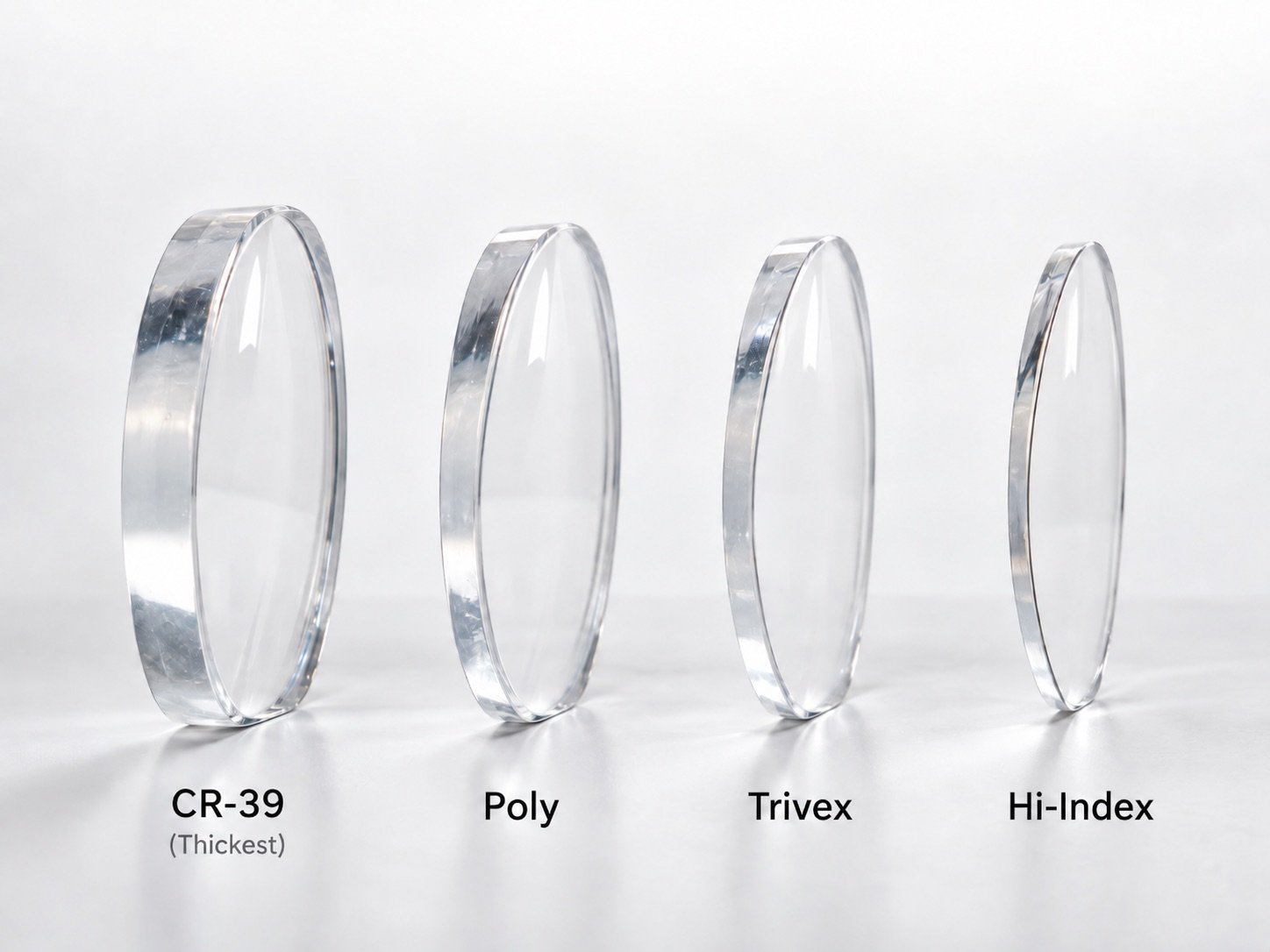
The same prescription can look very different depending on the material. Higher-index materials bend light more efficiently, so the lens can be thinner and lighter, especially for stronger prescriptions.
Impact resistance matters too. Polycarbonate and Trivex are much tougher than standard plastic, which is why we recommend them for kids, sports and safety.
Strong prescription? Ask about high-index lenses and a frame size that keeps edges thin. Freddy can show you the difference before you order.
Standard plastic
Clear optics at the lowest cost. A good fit for mild prescriptions.
Polycarbonate
Thin, light and highly impact-resistant, with built-in UV protection. Our go-to for kids, sports and safety.
Trivex
Light and impact-resistant like polycarbonate, with especially crisp optics. A great choice for active adults and rimless frames.
High-index
Noticeably thinner and lighter for stronger prescriptions, especially in larger frames.
Small upgrades that make a big difference
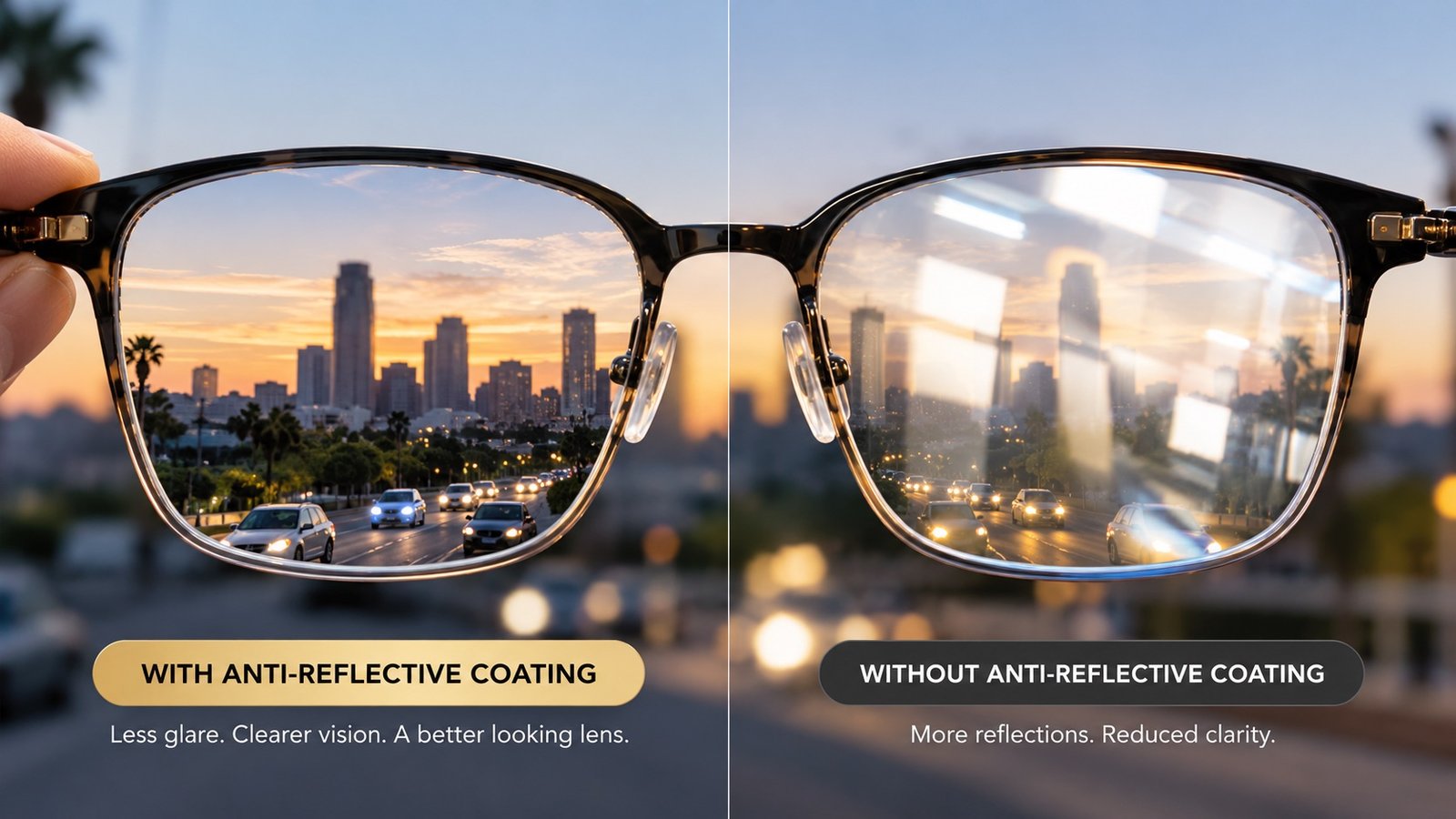
Anti-reflective
Cuts glare from headlights, screens and overhead lights, and makes lenses look nearly invisible in photos.
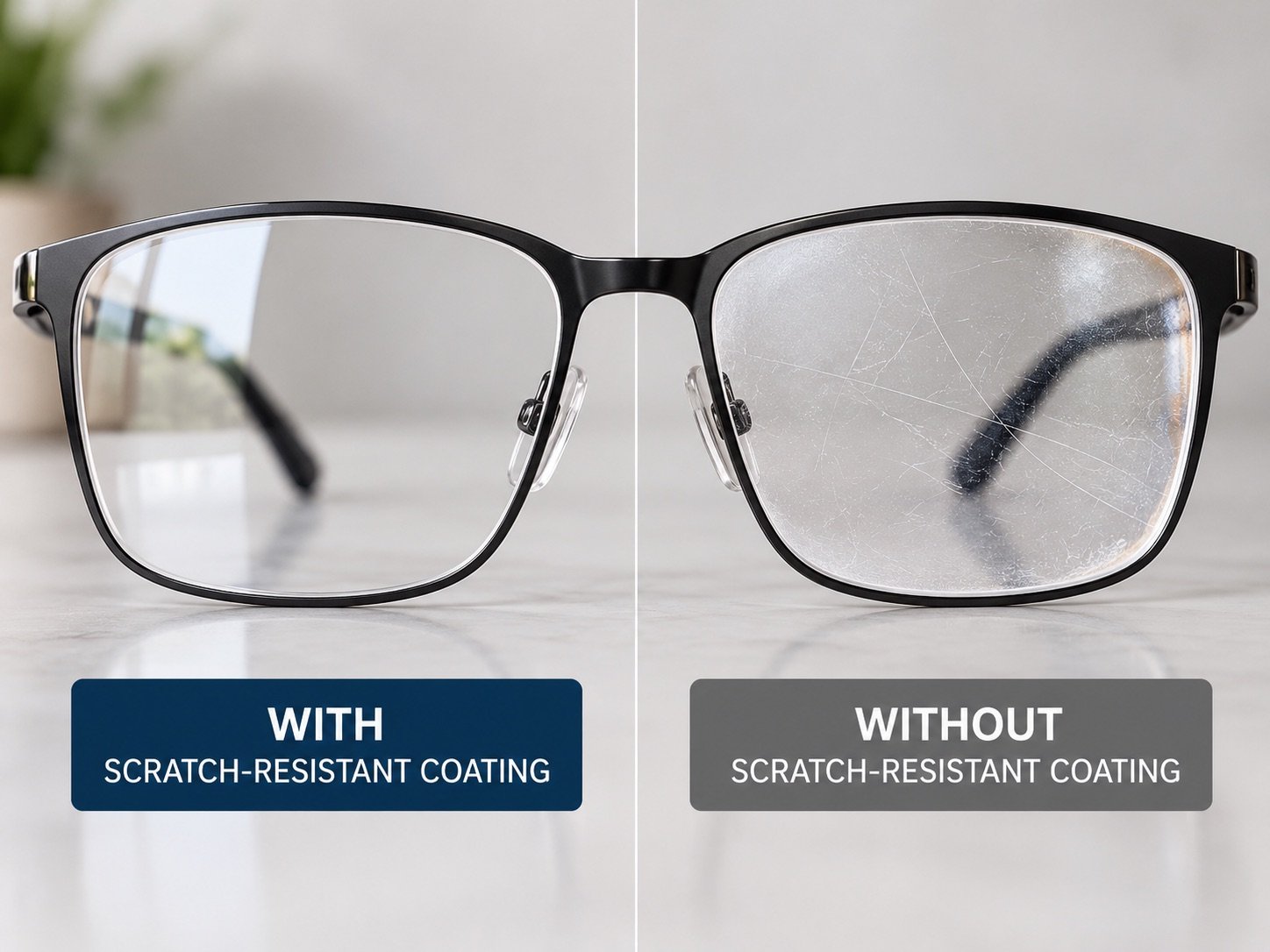
Scratch-resistant
A hard coat that helps lenses stand up to everyday wear. Recommended for every pair.
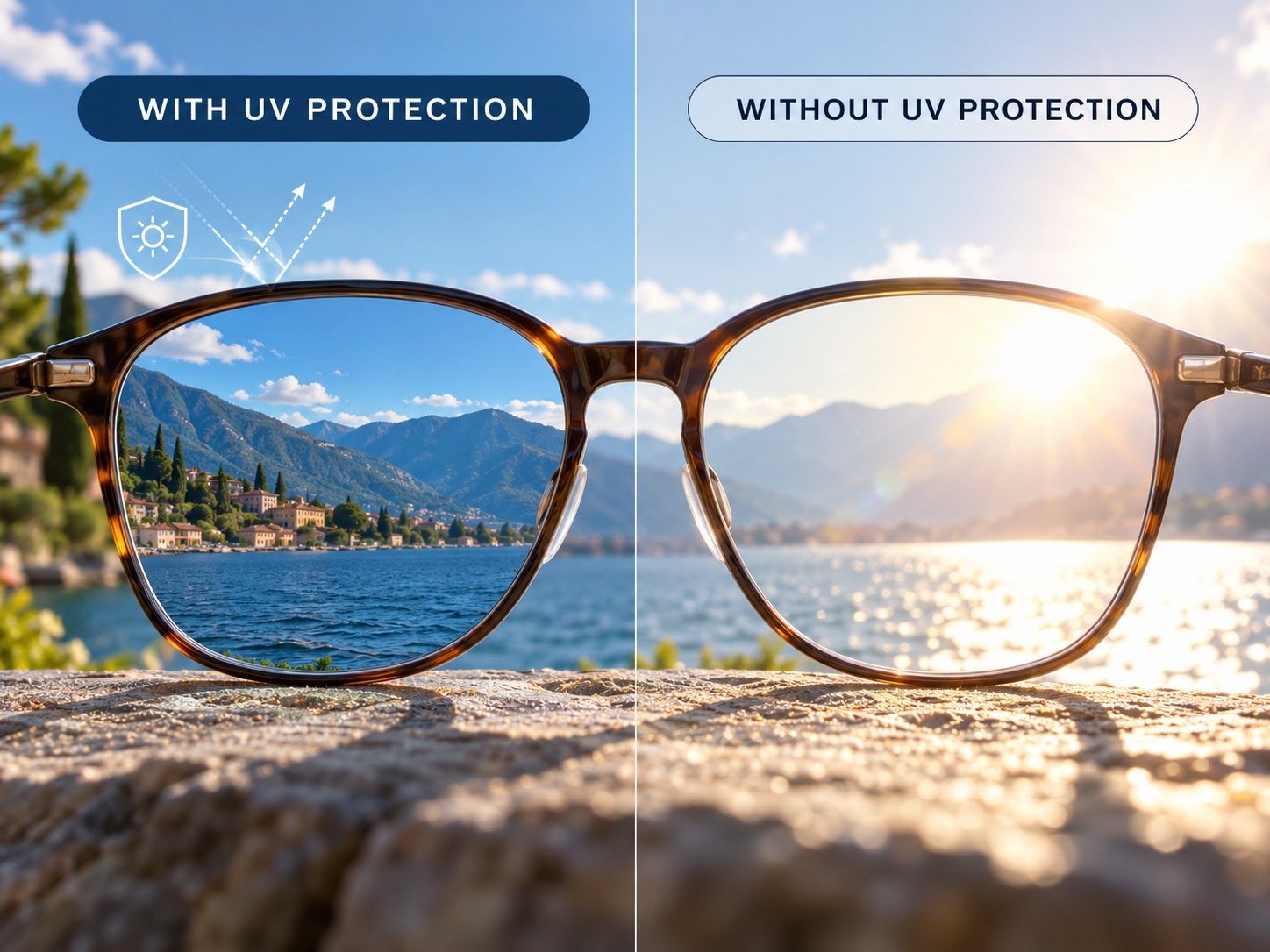
UV protection
Blocks harmful ultraviolet light to help protect your eyes over the long term.
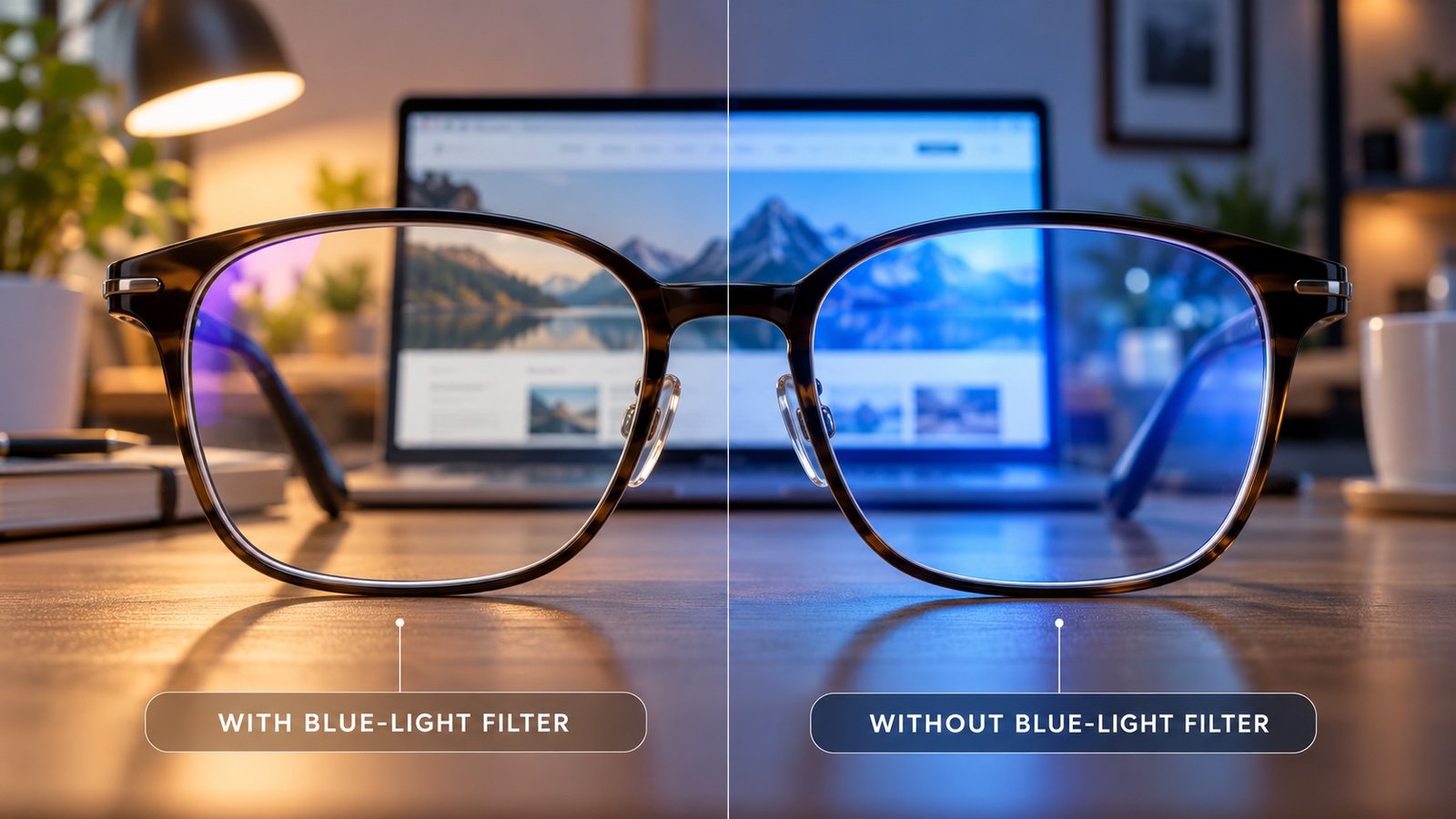
Blue light filtering
An optional coating some people find more comfortable on long screen days.

Smudge & water repellent
A slick top layer that resists fingerprints, dust and water spots, so lenses stay clean longer.
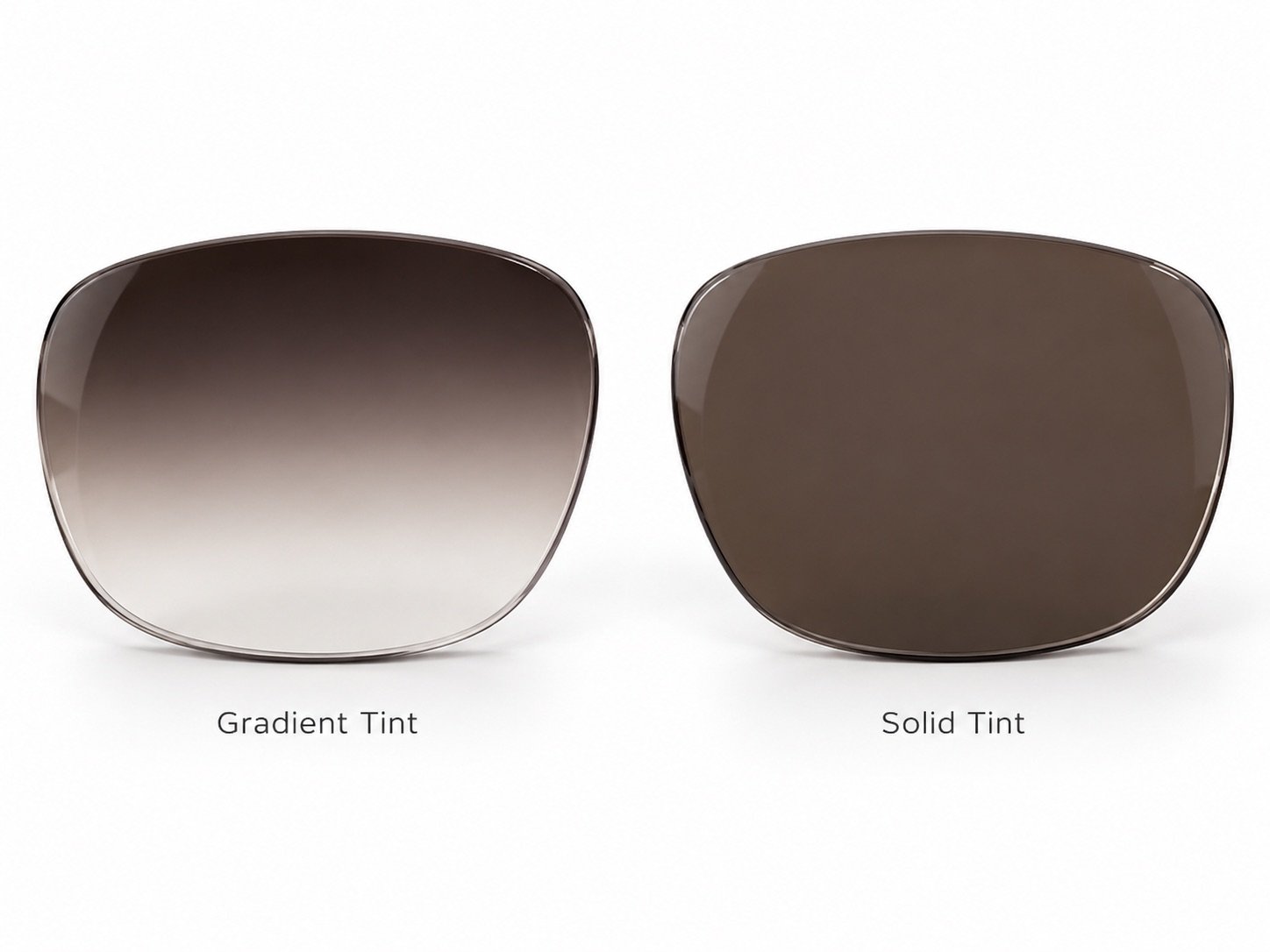
Tints
Light fashion tints or comfort tints for people who are sensitive to bright light.
Clear indoors, protected outdoors
Southern California sun calls for a plan. Here are your main options.

Light-adaptive lenses
Clear indoors and darken outdoors, like Transitions® lenses. One pair for everything, though most darken only a little in the car.
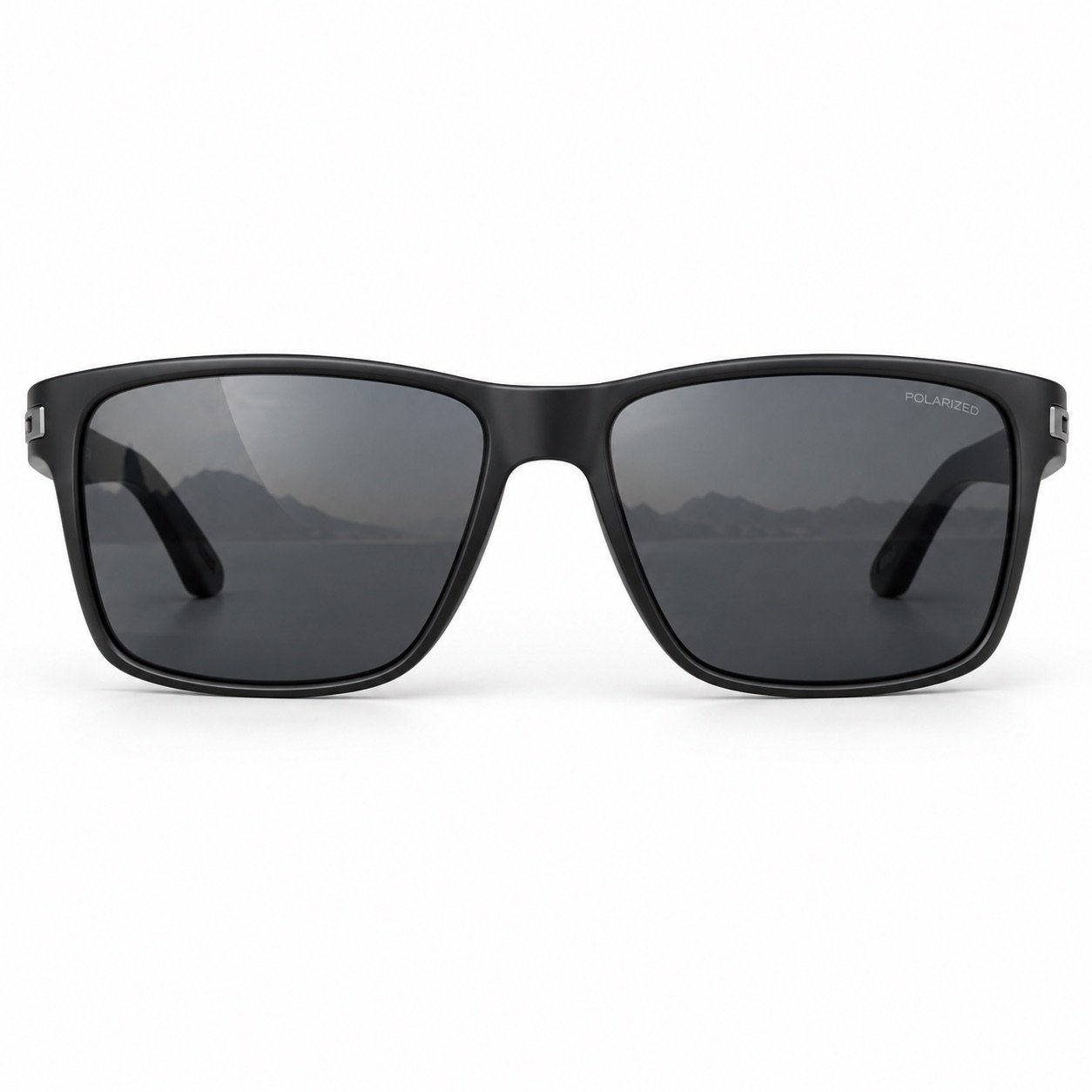
Polarized sunglasses
Prescription sunglasses that cut reflected glare from roads, water and car hoods. The best choice for driving and the beach.
Prefer something simple? Tinted prescription sunglasses are an affordable way to turn your prescription into everyday sunglasses.

Lenses that keep up with kids
- Impact-resistant polycarbonate or Trivex lenses come standard
- Scratch-resistant coating for backpacks and playgrounds
- Built-in UV protection for outdoor play
- Myopia control lenses that can slow worsening nearsightedness
Is your child’s prescription getting stronger every year? Learn about myopia management.
Choosing your lenses at Radiant
From your exam to the final fit, we guide you through every step.
Eye exam
Dr. Mai checks your vision and eye health and writes an up-to-date prescription.
Talk about your day
Screens, reading, driving, sports. Your habits shape the lens design and coatings we recommend.
Precise measurements
Freddy measures your pupil distance and, for progressives, your fitting heights in the frame you chose.
Fit & adjust
We fit your new glasses to your face and adjust them anytime they need it.
Make your benefits go further
Vision plans like VSP, EyeMed and Medi-Cal plans usually cover basic lenses, and many include a lens allowance. Upgrades like progressives, high-index and anti-reflective coatings may have a copay. We check your benefits ahead of time and give you the price before you order.
No vision insurance? Essential Vision Plan members save 20% on frames, lenses and lens upgrades. Membership is $129/year. And many single-vision lenses can be ready the same day.
Frequently asked questions
Still have questions? Call (562) 867-4716.
Do I need progressive lenses?
If you need help seeing both far away and up close, usually after about age 40, progressives let you do both with one pair and no visible line. Some people prefer separate distance and reading glasses instead. We’ll talk through what fits your day.
How long does it take to get used to progressives?
Most people adjust within a few days to two weeks. Wearing them full time helps. If something still feels off after that, come back and we’ll check the fit and measurements.
Is anti-reflective coating worth it?
For most people, yes. It cuts glare from headlights and screens, makes lenses look nearly invisible in photos, and lets more light through. It’s especially helpful for night driving and high-index lenses.
Do I need blue light filtering lenses?
They’re optional. Some people find them more comfortable for long screen days, but they don’t replace good habits like screen breaks and the right prescription. We’ll give you an honest recommendation.
Do light-adaptive lenses work in the car?
Most standard light-adaptive lenses darken only a little behind a windshield, because the glass blocks much of the UV light that activates them. If you drive a lot in bright sun, polarized prescription sunglasses are usually the better choice.
Can you put new lenses in my current frames?
Often, yes, if the frame is in good shape and suits your new prescription. Bring it in and Freddy will check it.
How long do new lenses take?
Many single-vision lenses can be ready the same day. Progressives, bifocals, high-index and specialty lenses are made at a lab and usually take about a week or two.